Clothing Care Label Requirements for Private Label Orders: A Buyer Checklist
Learn what to prepare for clothing care labels in a private label order, how to connect instructions to the approved garment, and what to verify for each destination market.
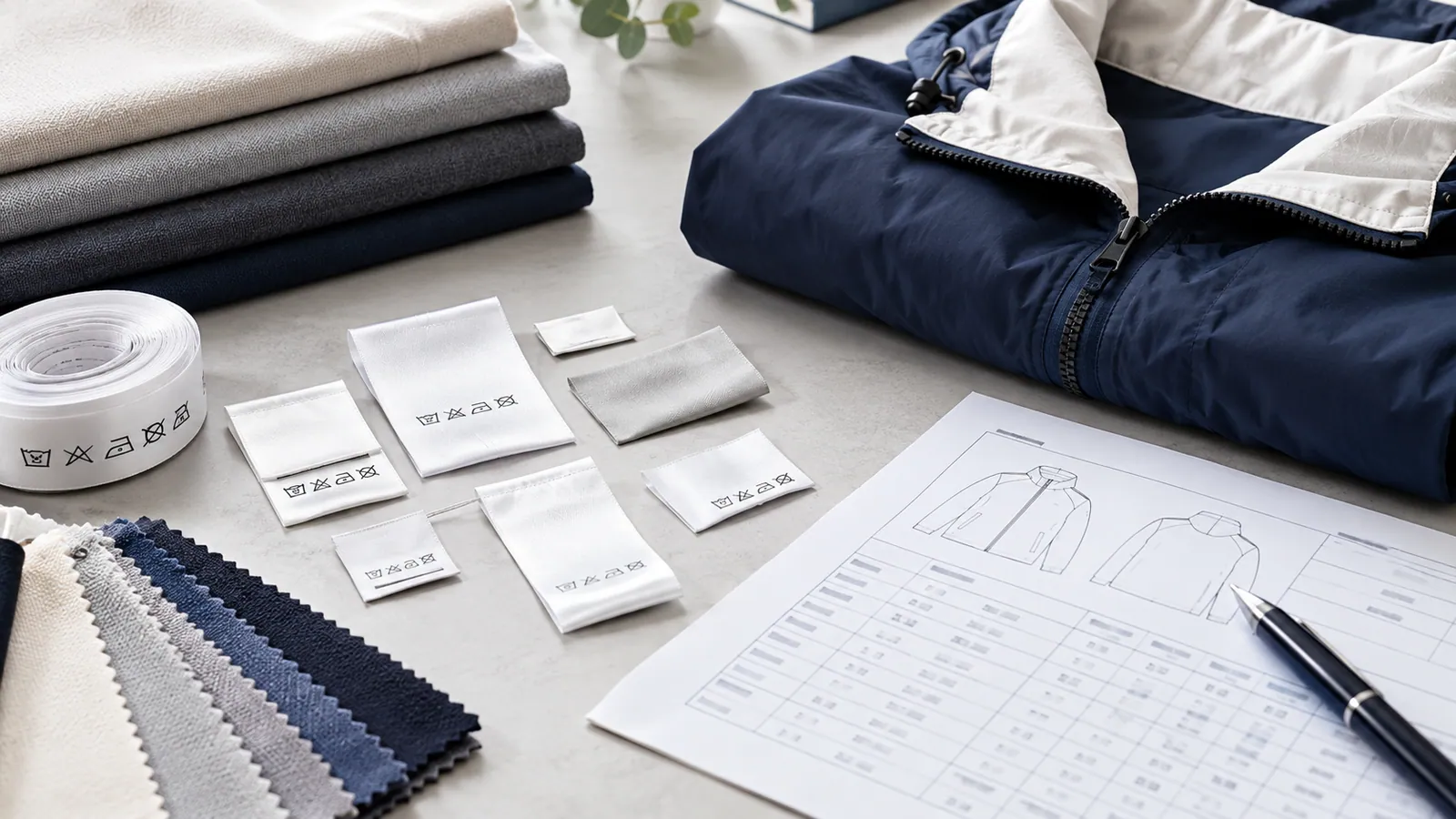
Private label clothing labels are easiest to fix before sampling, not after production. Start with the destination market, identify the information that applies to the garment, create one controlled label file, and make the supplier confirm the text, symbols, placement and revision against the same garment specification. A label is not compliant merely because the factory has used a similar label before.
What a care label is meant to do
A care label tells the customer how to clean and finish the garment during ordinary use. It is different from a brand label, a fiber-content label, a country-of-origin label and a hangtag, although these items may appear together in one label system.
For the United States, the Federal Trade Commission says manufacturers and importers must provide care instructions for covered textile wearing apparel. Instructions need a reasonable basis and should not mislead the customer about the care the garment can withstand. The FTC also explains that labels must be permanent, secure, legible and easy to find at the point of sale. See the FTC care-labeling guidance.
For the European Union, textile-fibre composition is governed by Regulation (EU) No 1007/2011. Fibre-composition information and care information are related but not identical tasks. Check the destination-specific requirements before approving artwork; the supplier’s standard label is not proof that the garment is ready for every market. See the EU textile-label overview.
This is a sourcing checklist, not legal advice. The importer or responsible business should confirm the current requirements for the country where the product will be sold.
Separate the five information groups
Do not send a supplier one vague request such as “add a compliant label.” Break the label pack into separate fields so that each one can be reviewed and versioned.
| Information group | Buyer should prepare | What the supplier should confirm |
|---|---|---|
| Brand and style identity | Brand name, style number, size range and label position | Exact artwork, dimensions, material and attachment method |
| Fiber composition | Fiber names and percentages for the finished garment | Composition matches the approved material and any trim or lining disclosure |
| Care instructions | Wash, bleach, dry, iron and professional-care directions supported by the garment | Symbols or wording are legible, complete and supported by the garment’s construction and tests |
| Origin and responsible-party details | Destination-market requirements and responsible business information | Placement, language, permanence and required identifiers are confirmed for the destination |
| Packaging and traceability | Hangtag, polybag, carton, SKU, barcode and revision references | Every packed unit uses the approved label and current packaging version |
The exact fields depend on the destination, product type, claims and importer role. Treat the table as a control structure, not a universal legal template.
Build the label brief before sampling
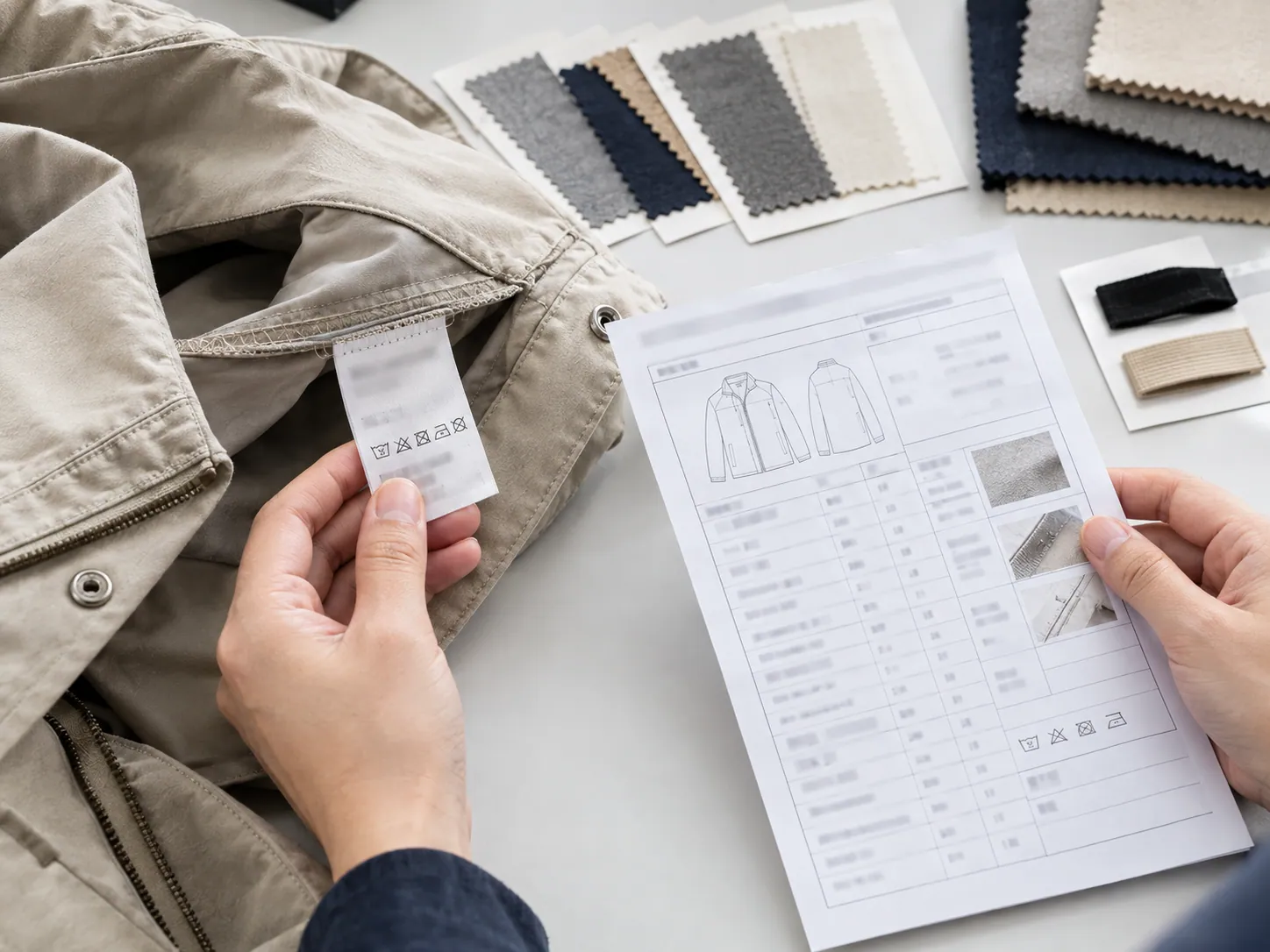
Create a label brief before asking for a sample. The brief should include:
- Target market and sales channel. Name the country or countries and whether the garment is sold directly to consumers, to a business or through a marketplace.
- Product identity. Record the style number, garment type, size range, colorway and revision number.
- Material scope. List the main fabric, lining, filling, rib, trims and any component that could change the care instruction.
- Care basis. State which wash, dry, iron, bleach or professional-care instructions are intended, and identify the test or technical evidence supporting them.
- Label construction. Specify woven, printed, heat-transfer or another format, plus dimensions, fold, stitch method, color and minimum legibility.
- Placement. Show the location on a flat sketch or tech pack and state whether the label must remain permanent and accessible.
- Packaging relationship. Define which information appears on the garment, hangtag, package or carton. Do not assume a hangtag can replace a required permanent label.
- Approval authority. Name who approves artwork and which revision becomes the production reference.
Use the same version number on the label artwork, product specification and sample record. This is the simplest way to prevent an approved label from being replaced by an earlier file during production.
How to choose care instructions without guessing
Care instructions should describe the finished garment, not only one fabric swatch. A garment may combine a shell fabric, lining, print, embroidery, coating, elastic, zipper or adhesive. The most restrictive component can determine the practical instruction.
Ask the supplier to explain:
- which component limits the wash or drying method;
- whether the instruction is based on a finished-garment test, component test or documented technical experience;
- what happens to color, shrinkage, print adhesion, shape and trim attachment after the recommended care process;
- whether a warning is required for a process the customer might reasonably assume is safe; and
- whether the instruction changes between colorways, fabric lots or decoration methods.
Do not accept “machine wash” as a complete answer when the garment needs a temperature, cycle, drying, ironing, bleaching or professional-care limitation. Do not print “dry clean only” merely because it is a familiar default; the instruction should have a reasonable basis for the finished garment.
Lock the artwork and sample together
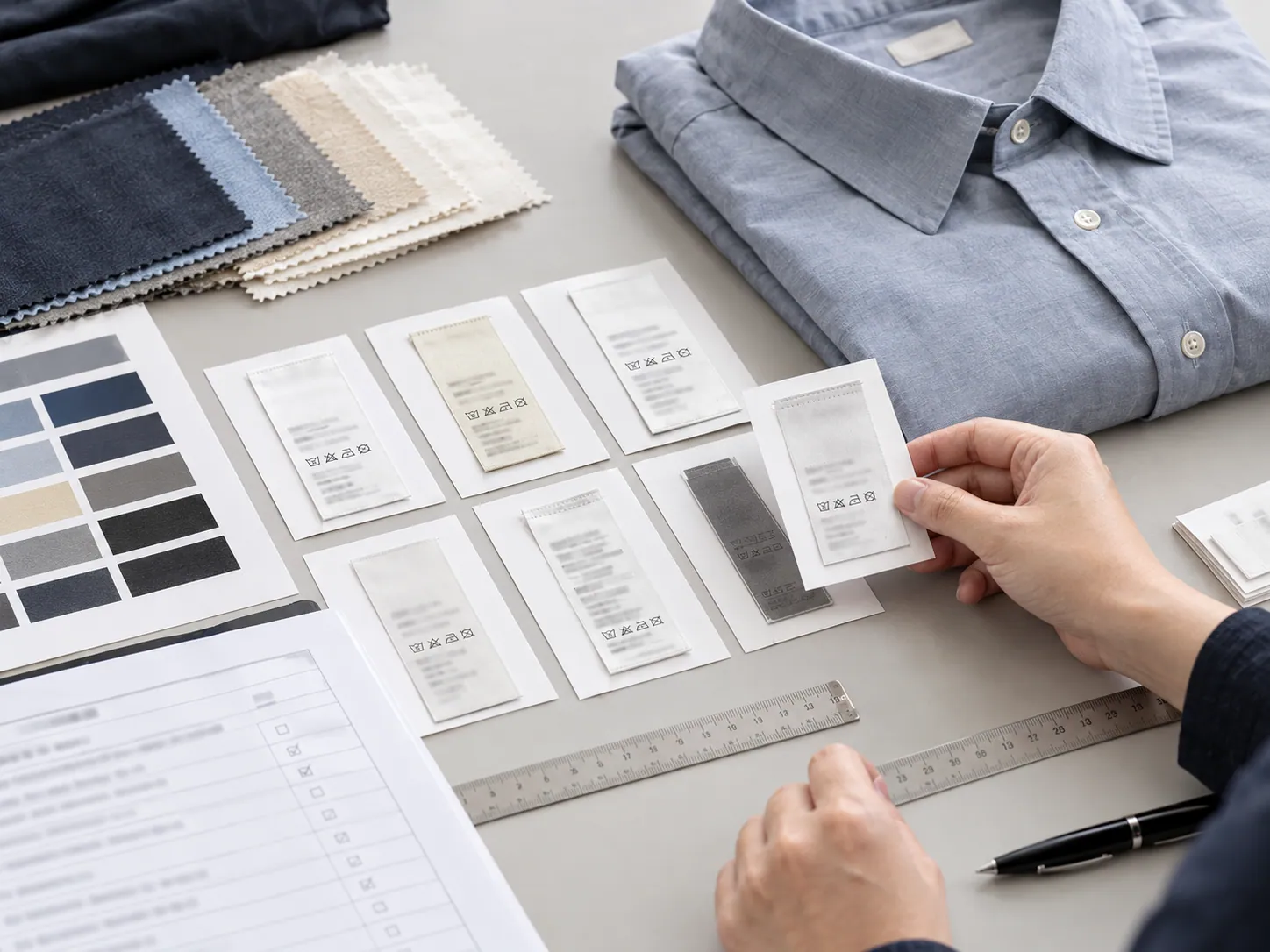
The label should be reviewed as part of the garment sample, not as an isolated graphic. At the label approval gate, compare:
- the text or symbols against the current destination brief;
- fiber content against the material and trim list;
- style, size and color references against the sample;
- label dimensions, fold and attachment against the tech pack;
- legibility after sewing, washing or heat transfer;
- placement against the garment’s construction and access requirements; and
- the label revision against the purchase order and packing files.
Keep a digital PDF and a physical approved label or garment counter-sample. Record approval date, approver, revision, open exceptions and the action required before bulk production.
The sample approval article on this site covers the broader garment gate in Clothing Sample Approval Checklist. Use this article for the label-specific preparation that should happen before that approval.
A practical supplier confirmation request
Ask the supplier to reply against the same numbered list instead of sending a general confirmation. For example:
Please confirm label version CL-03 for style JK-204, color Navy, size range S-XXL and destination US. Confirm fiber composition, care method and symbols, responsible-party information, label dimensions, placement, attachment method, packaging reference and the evidence or test basis for the care instructions. Mark each item as confirmed, requires buyer input or not applicable.
This format exposes missing decisions early. It also makes a later change traceable: if the shell fabric changes, the supplier must revisit the fiber and care fields instead of silently reusing the old label.
Common mistakes
Treating a brand label as a compliance label
A woven brand label identifies the product. It does not automatically provide fiber, origin or care information required for the destination.
Reusing a label from another garment
Two garments can share a brand and still require different instructions because their fiber blend, lining, decoration or finishing differs.
Approving a digital mock-up only
Small text, symbols, folds and sewn placement can change materially on the finished garment. Review the physical sample or an equivalent production-format proof.
Letting the supplier choose the destination
The supplier can explain production constraints, but the buyer must state where the garment will be sold and who holds the destination-market responsibility.
Changing the garment after label approval
A new fabric, dye, print, lining, trim or wash process can invalidate the earlier care basis. Reopen the label review whenever the product specification changes.
Pre-production release checklist
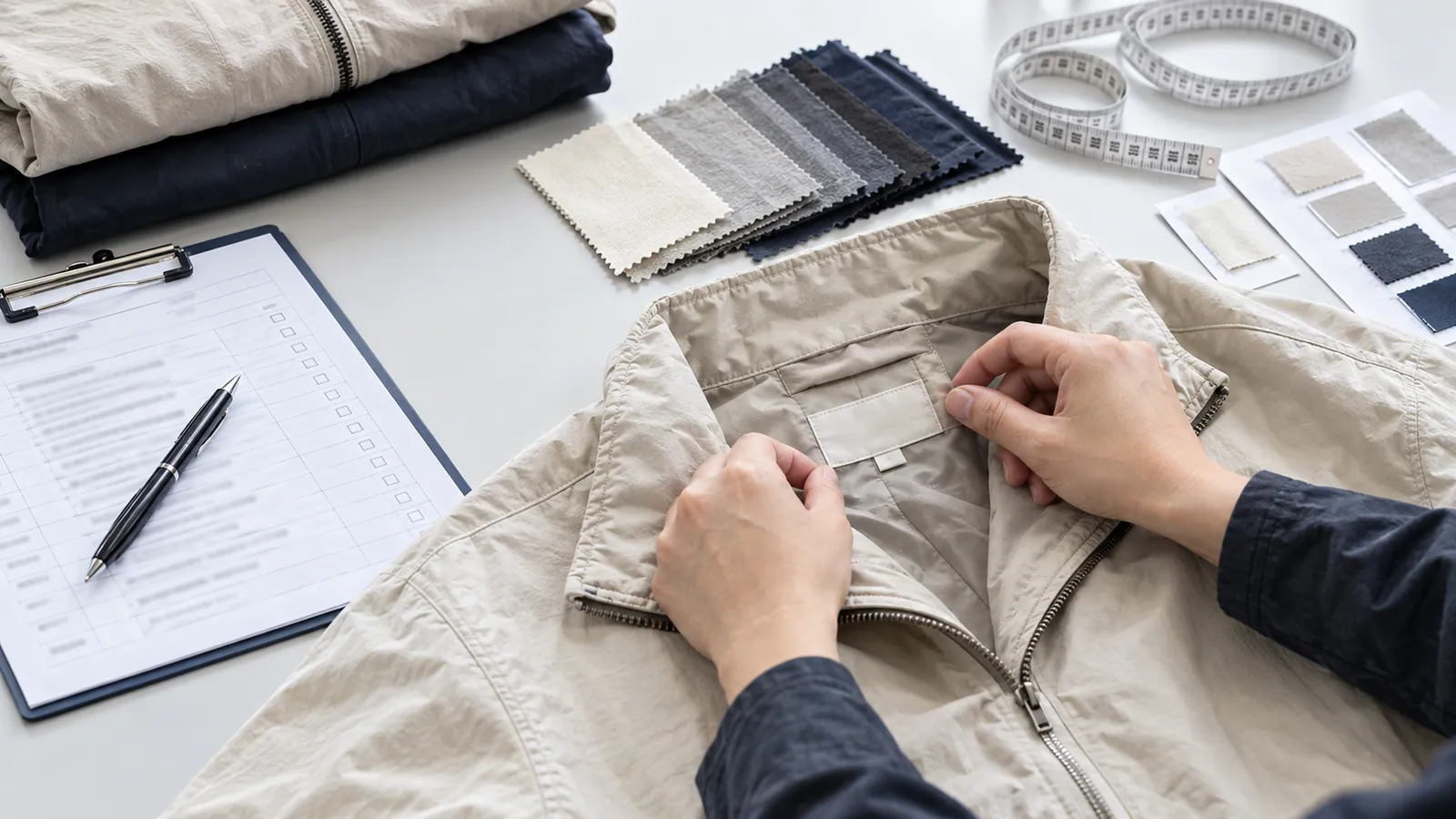
Before releasing bulk production, confirm:
- the target market and responsible business are recorded;
- label artwork has a unique revision number;
- fiber and component information matches the approved garment;
- care instructions have a documented basis for the finished garment;
- wording or symbols are legible and permanently attached where required;
- label placement and packaging references match the tech pack;
- supplier confirmation is written against each field;
- the physical sample or proof is retained; and
- the purchase order names the approved label revision.
If any line is unresolved, hold the release rather than letting the supplier fill the gap from a previous order.
Final answer
Prepare the care label as a controlled product document: destination first, garment evidence second, artwork revision third and supplier confirmation before bulk production. This approach does not replace a market-specific compliance review, but it prevents the most common sourcing failure - a label that is correct for another garment, another market or an earlier revision.
For a private-label apparel request, start with the private label apparel category, attach the product specification sheet, and ask for a project-specific sourcing review.
Sources and verification
- U.S. Federal Trade Commission: Clothes Captioning - Complying with the Care Labeling Rule
- U.S. Federal Trade Commission: Apparel and Labeling
- European Union: Textile label
- EUR-Lex: Regulation (EU) No 1007/2011
Legal and labeling requirements vary by destination, product and sales channel. Confirm current obligations with the relevant authority or qualified counsel before production.