How to Approve Fabric Lab Dips for Private Label Clothing Orders
Review fabric lab dips before private label clothing production: colour standards, light sources, tolerances, approval records and bulk-lot checks.
Quick answer
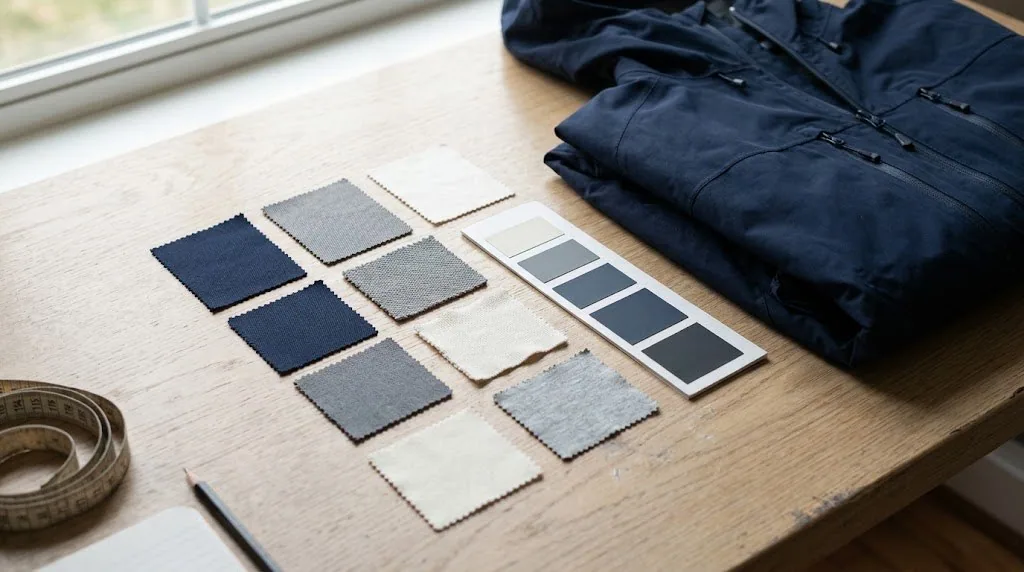
Approve fabric lab dips against an identified colour reference on the specified fabric, under agreed viewing conditions and any agreed instrumental tolerance. Record the dip ID, material revision, decision, approver and conditions, then retain the approved sample for bulk-lot comparison. Colour approval does not automatically approve the fabric specification, colourfastness, finished garment or destination-market compliance.
If a fabric colour must be repeatable in bulk, the lab dip approval process needs more than a message saying “the navy looks good.” Buyer and supplier need the same colour reference, material version, viewing conditions and written decision. A lab dip is evidence for colour development; it is not proof that every bulk lot or finished garment will meet every requirement.
What a lab dip is
A lab dip is a small dyed fabric sample prepared to match an agreed colour target before bulk dyeing. It lets a buyer and supplier discuss the same reference before committing production capacity. Datacolor’s textile and apparel colour-management guide describes dyeing colour samples and approving them before production moves forward.
A lab dip does not replace a garment sample, care-label review, performance test or pre-shipment inspection. Keep the fabric-colour decision separate from the broader clothing sample approval checklist.
Do not confuse a dyed fabric lab dip with a printed strike-off. A strike-off is a trial print used to review print colour, artwork, scale and other agreed print details. It does not automatically prove placement on the finished garment. Identify which sample type you are approving.
1. Freeze the colour target before asking for a dip
Send one controlled brief, not a colour name alone. Include:
- the identified physical colour standard or agreed measured digital colour standard;
- fabric composition, construction, target weight and intended finish;
- the product and colourway ID;
- the target bulk quantity and dye-lot grouping, if known;
- the primary and secondary viewing conditions the team will use;
- any agreed colour-difference formula and tolerance; and
- the decision date and person authorised to approve or reject.
If the reference is a physical swatch, label it with an ID, revision and date. A screen image can support communication, but it is not a measured digital standard and should not silently replace the physical reference. The product specification sheet guide explains how to keep the colour target connected to a controlled material version.
For a fabric with a wash, coating, brushing or other finishing process, ask which production stage the dip represents and how the final appearance will be confirmed. Record differences between the submitted sample and intended production fabric.
2. Ask for a traceable supplier submission
Ask the supplier to return the dip with a sample ID and enough information to link it to the correct fabric and development round:
| Record | Why it matters |
|---|---|
| Dip ID, submission date and revision | Prevents an old sample being approved by mistake |
| Fabric composition, construction and finish | Identifies the substrate being reviewed |
| Supplier colour-development reference | Connects the submission to the supplier’s internal record |
| Comments on shade, handfeel and surface | Separates a colour issue from a fabric issue |
| Instrument reading or report, where agreed | Provides numerical evidence alongside the visual review |
| Photographs under the agreed light | Helps remote triage; does not settle final colour acceptance |
The supplier should state whether this is a first submission, correction or final approval candidate. You can request a traceable recipe reference without requiring disclosure of the supplier’s proprietary dye recipe. Keep rejected versions and the reasons for rejection in the project record.
3. Review colour under controlled conditions
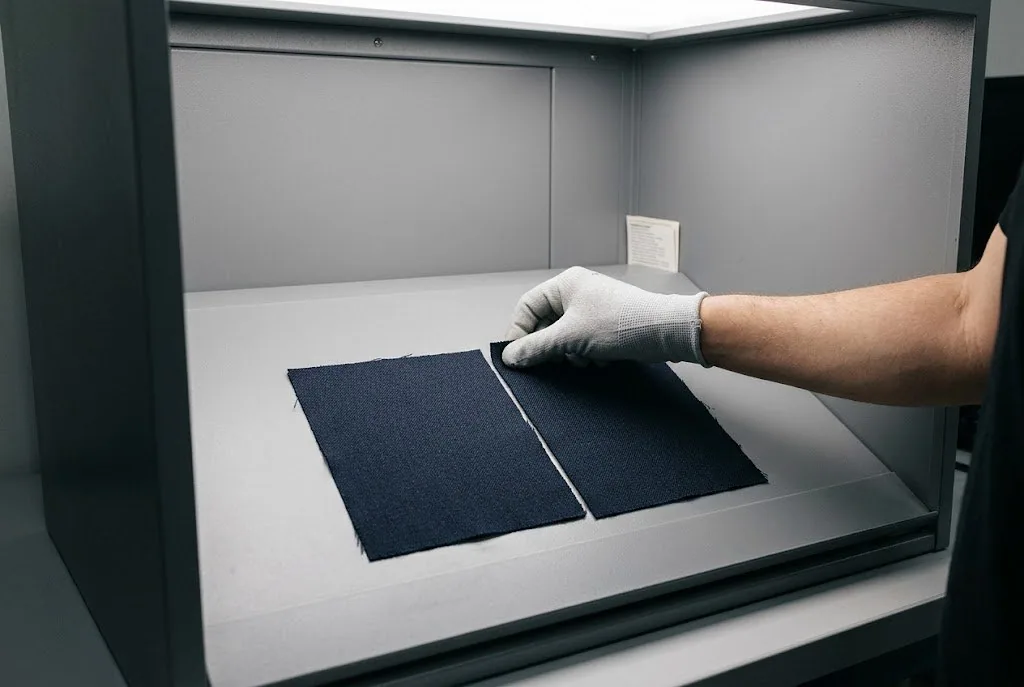
Use the viewing conditions written into the brief. AATCC EP9 describes visual assessment of textile colour difference against a standard; AATCC EP6 addresses instrumental colour measurement. Their public summaries establish scope, not a complete test procedure or a universal pass/fail limit. Follow the agreed procedure when a customer requires a named method.
Review the reference and dip side by side, aligned in the same direction. Use a neutral surround and consistent sample presentation. Check:
- Hue: Is the dip too red, yellow, blue, green or otherwise shifted?
- Lightness: Is it lighter or darker?
- Chroma: Is it duller or more saturated?
- Surface: Does sheen, nap, texture or finish change the apparent colour?
- Uniformity: Are there streaks, bars or patches?
Write the light sources into the approval record and compare under the agreed primary and secondary sources. Two samples can match under one light and differ under another; this is illuminant metamerism. See Datacolor’s explanation of metamerism.
For example, if a dip appears acceptable under the primary light but visibly mismatches under the agreed secondary light, record both findings and request a correction or an explicit buyer decision. Do not treat the first match as unconditional approval.
Photographs can help identify obvious problems. Final colour decisions should use the physical reference or a validated digital colour workflow with measured data and agreed settings, rather than a single phone photograph.
4. Separate colour approval from fabric approval
Use two decisions instead of one vague “approved” note:
| Decision | Question |
|---|---|
| Colour | Does this dip match the agreed target under the agreed conditions? |
| Material | Does the specified composition, construction, handfeel, width, weight and finish suit the garment? |
A dip can be the right colour on the wrong fabric. Conversely, the fabric can be correct while the shade needs another round. Record Approved, Approved with conditions, Revise and resubmit, or Rejected, and state what each decision covers. If a condition affects production acceptance, resolve it before unconditional bulk release.
5. Agree tolerances and measurement settings
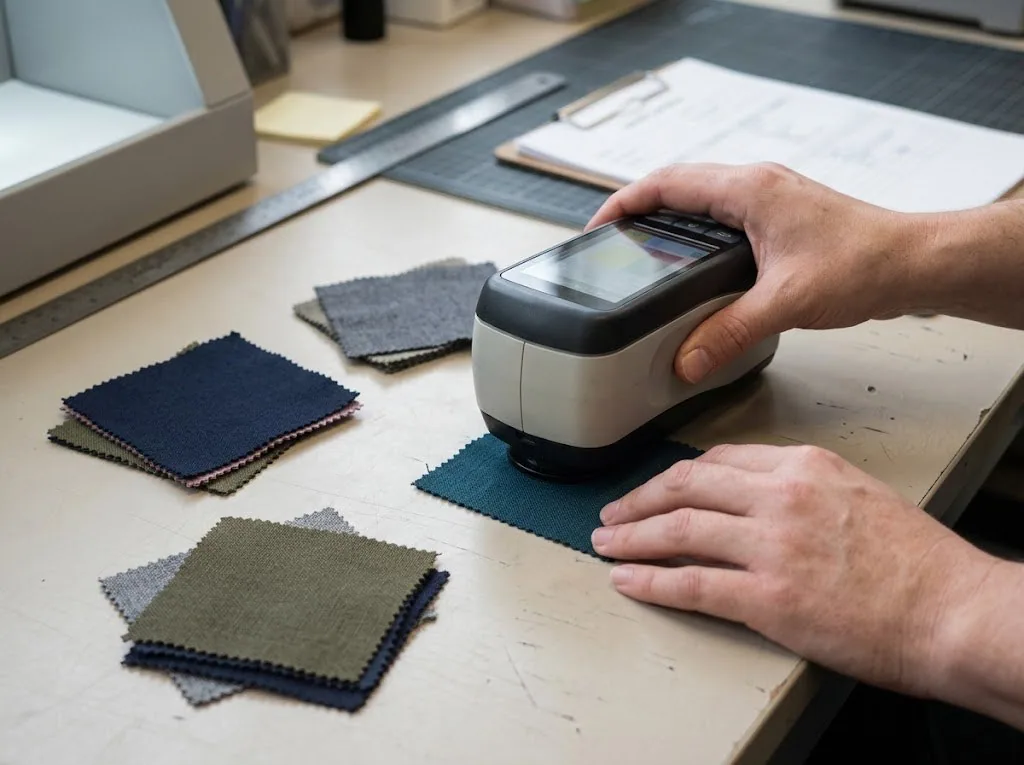
If the buyer has a colour tolerance, quote its standard and method. ISO 105-J03:2009 describes calculating textile colour differences using Delta E CMC for specimens of the same material measured under the same conditions. Its public abstract allows a maximum tolerance based on the closeness of match required for the end use; it does not prescribe one universal threshold.
Do not copy a generic internet “acceptable Delta E” value into a purchase order. Agree the colour-difference formula as well as the limit: values from different formulas are not interchangeable. Record instrument settings, illuminant/observer combination, sample preparation and presentation. Instrument data supports the decision but does not remove the need to assess the textile surface and agreed viewing conditions.
6. Keep a written approval and retained reference
The approval record should contain:
- the final dip ID, physical retained sample and identification photo;
- target reference ID, revision and viewing conditions;
- approved colourway and material specification;
- decision, approver, date and outstanding conditions;
- confirmation that buyer and supplier retain matching references; and
- the rule for bulk-lot comparison and escalation.
An approval message could read:
Dip LD-03, navy colourway N-01, is approved as the colour-development reference on fabric specification F-02. Bulk lots remain subject to comparison with the retained approved standard. This approval does not authorise changes to composition, finish or garment construction.
Protect retained samples from contamination, excessive handling and light exposure. The approval record should make it clear which reference will be used if a later batch is disputed.
7. Check bulk fabric before cutting
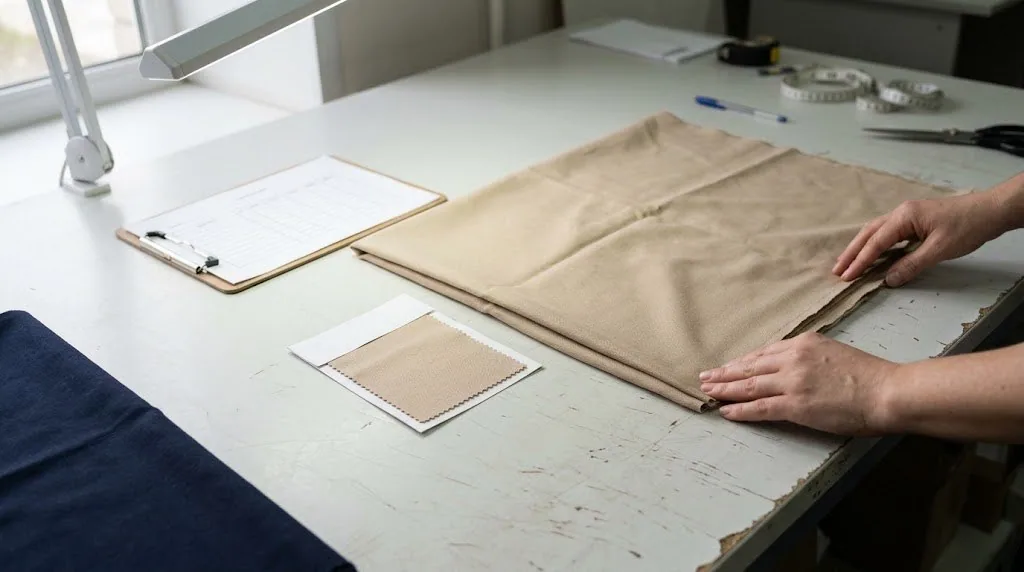
Bulk dyeing is a new production event. Agree before production how each dye lot will be sampled and reviewed, including any roll or within-roll shade checks needed for the order. Obtain representative bulk cuttings or hanger samples before garment cutting, compare them with the retained reference under the same conditions, and record the lot numbers.
One bulk cutting does not establish that every roll is uniform. If the supplier changes fibre content, finish, dye route or mill, reopen the colour review. Investigate visible lot-to-lot or within-roll differences before mixing fabric in garment production.
Colour approval does not establish wash fastness, light fastness, crocking or regulatory compliance. Specify separate performance tests and acceptance criteria for the product and destination, and agree who arranges and reviews them. For garment-level release, return to the clothing sample approval process.
Supplier message template
Please submit lab dips for colourway [ID] on fabric specification [revision]. Mark each sample with dip ID, revision and date. Include composition, construction, finish, supplier development reference and any agreed instrument report. We will review against target [reference ID] under [primary and secondary viewing conditions], using [agreed formula and tolerance, if applicable]. Please obtain written colour approval before bulk dyeing and written bulk-lot acceptance before garment cutting, according to our agreed release plan. Unidentified samples are not approval references.
Prepare the next sourcing brief
Start a silk, wool or knit fabric sourcing request with the fabric specification and colour reference. For a complete garment, connect those files to your custom and private label apparel brief. Include the approval owner, unresolved requirements and intended bulk-lot checks when you request a sourcing review.
Sources and further reading
- AATCC EP9-2025: Visual Assessment of Color Difference of Textiles
- AATCC EP6-2021: Instrumental Color Measurement
- ISO 105-J03:2009: Calculation of colour differences
- Datacolor: Textile and Apparel Industry Guide
- Datacolor: What Is Metamerism?
The workflow above is a buyer-side coordination checklist. Named test methods require their full procedures and appropriate equipment; the illustrations do not demonstrate a certified test or a particular approval result.
Frequently asked questions
Is a lab dip the same as a colour swatch?
A lab dip is a supplier-prepared dyed sample for a specified fabric. A generic colour swatch may be a reference, but it does not show how the target colour behaves on your production substrate.
Can a buyer approve a lab dip from a photo?
A photo can help identify an obvious mismatch or manage remote triage. It should not be the sole final approval for a commercially important colour because cameras, screens, light sources and fabric surfaces change the appearance. Validated digital colour workflows use measured colour data and agreed settings, not photographs alone.
Does an approved lab dip guarantee the bulk colour?
No. It provides a retained reference for the bulk-lot review. The bulk lot still needs a documented comparison and any agreed testing.
Where should lab dip approval sit in an apparel workflow?
Place it after the colour target and fabric specification are fixed, and before bulk dyeing. Link it to the garment sample, specification revision and production-release record.