1688 vs Taobao vs Alibaba for Overseas Buyers
Compare 1688, Taobao and Alibaba for overseas product sourcing: buyer fit, payment, MOQ, samples, shipping and the work behind the listed price.

Quick answer
Alibaba.com is designed for overseas wholesale buyers, while 1688 is mainly a domestic Chinese wholesale marketplace and Taobao is mainly a retail channel. The right choice depends on the product, quantity, payment route, destination and who will handle receiving, inspection and export. Many buyers research on Taobao, validate on Alibaba and compare domestic supply on 1688.
All three platforms serve different buyer and transaction contexts. The right choice depends on product, quantity, language, payment, export and support requirements rather than a promised percentage saving.
The 30-second version
| Alibaba.com | 1688.com | Taobao | |
|---|---|---|---|
| Built for | International wholesale | Chinese domestic wholesale | Chinese domestic retail |
| Language | English | Mandarin only | Mandarin only |
| Typical pricing | Export quote | Domestic quote; compare full landed cost | Retail or small-quantity pricing |
| MOQ | Supplier and product dependent | Supplier and product dependent | Often retail or small-quantity |
| International delivery | Usually available; confirm route | Depends on listing and payment route | Depends on destination and route |
| Payment for overseas buyers | Confirm current account and order terms | Domestic or selected cross-border routes | Destination and checkout route dependent |
| Who’s selling | Factories + many trading cos | Factories & wholesalers | Retailers & resellers |
If you remember one thing: 1688 is a domestic wholesale context. Lower platform pricing can come with domestic payment, Mandarin communication, domestic delivery and export work that an overseas buyer must arrange separately.
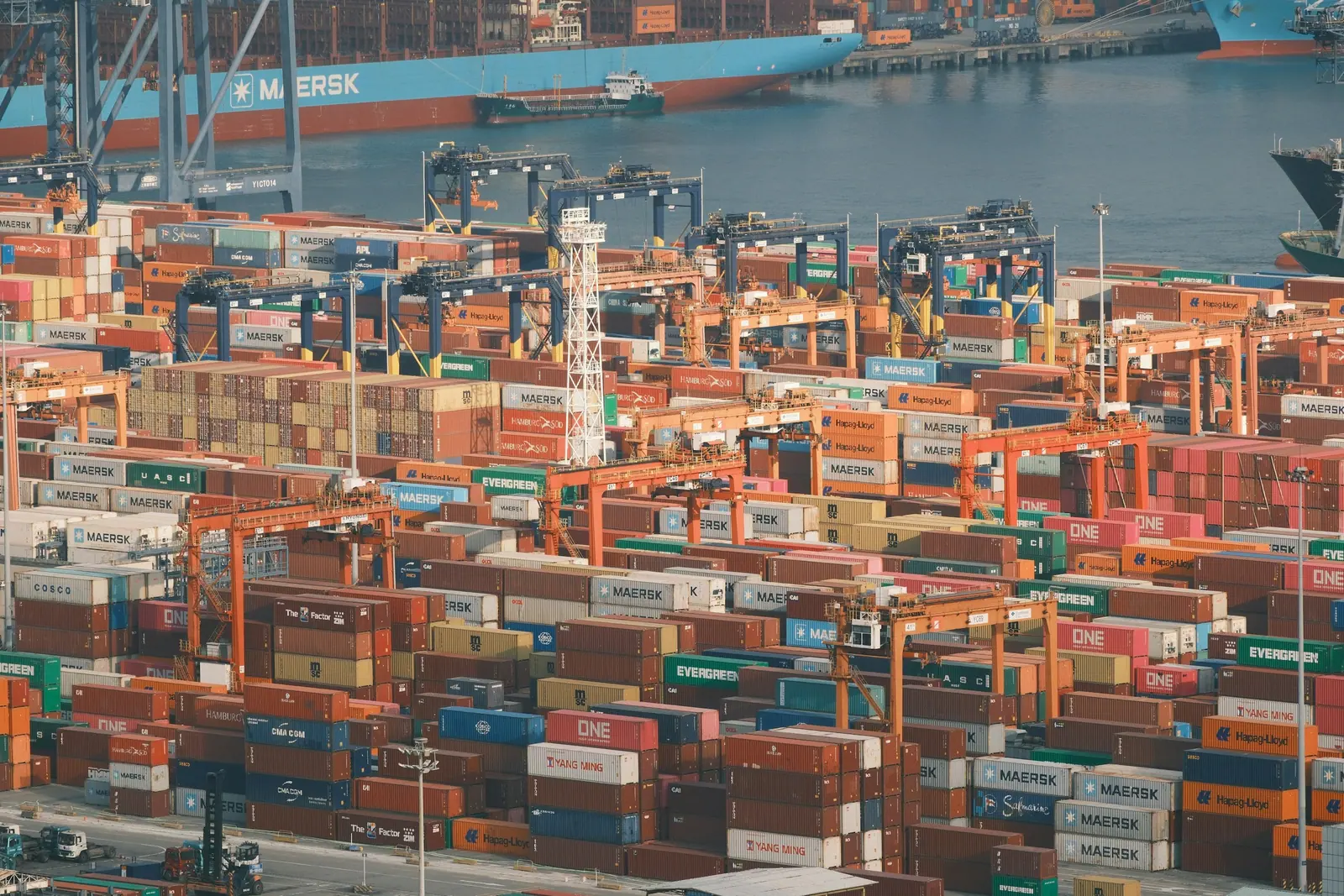
Why the same factory quotes three different prices
The price gap between platforms is usually read as a discount you are being denied. It is more accurate to read it as three different transactions with three different amounts of work bundled in.
A domestic wholesale listing generally assumes the buyer is in China: goods move on domestic courier, payment settles through a domestic wallet, packaging is domestic-market, and nothing about export is anybody’s job. An export listing assumes the opposite — export packing, export documentation, an international payment route and a seller who has done all of it before.
The 1688 price is not the Alibaba price with the margin removed. It is the Alibaba price with the export work removed, and that work still has to happen.
Whether the gap survives once you add the missing pieces is a genuine question with a genuine answer — but it is a calculation, not an assumption, and it changes by product, volume and route.
What a domestic price leaves for you to arrange
| Step | Included in an export quote | Left to you on a domestic listing |
|---|---|---|
| Mandarin negotiation and specification | Usually handled by an export sales team | Yours to arrange |
| Domestic payment | Handled through the platform | Needs a domestic payment route |
| Delivery to a China address | Not applicable | Domestic freight, per supplier |
| Receiving, checking, consolidation | Not applicable | Someone in China must do it |
| Export packing and documents | Normally included | Yours to arrange |
| International freight and customs | Quotable through the platform | Yours to arrange |
Filling in the right-hand column is the whole exercise. On some products it barely dents the gap; on others it closes it entirely.
Alibaba: the convenient one
Alibaba.com is the only one of the three actually designed for you, the overseas buyer. English listings, card payments, Trade Assurance escrow, suppliers who ship internationally every day. For a first order, that convenience has real value — we walked through the full cost picture in Alibaba vs sourcing agent: the real cost comparison.
The structural catch: because it’s the front door for foreign money, it’s also where trading companies concentrate. Plenty are competent — but you often can’t tell from the listing whether you’re one step from the factory or three, and each step is margin. The listed price is also famously a teaser: real quotes for your spec, your packaging and your shipping terms typically land well above it.
Alibaba fits you when: order values are modest, your product is standard, and you value escrow protection over the last 20% of price.
1688: the domestic wholesale option
1688 can expose domestic-trade listings, sometimes from suppliers that also appear through export-facing channels, and some products have lower quantity tiers. That does not make two listings equivalent: verify the seller, specification, quantity break, packaging and route before treating the price difference as savings.
The trade-off is operational work. Product pages and seller conversations are primarily designed for domestic Chinese trade, and the buyer must confirm the available payment route, receiving address, inspection scope and export plan. An agent may coordinate those steps, but it adds a separate service relationship and fee. For the full order sequence, see How to buy from 1688 as an overseas buyer.
1688 fits you when: the product, seller, payment route and export plan work for your business, and you have a responsible way to handle Mandarin communication, domestic delivery and international shipping.
What to check before comparing a 1688 listing
The listing is only a starting point. Before comparing its price with another platform, check:
- Seller type and business entity. A manufacturer, wholesaler and trading company carry different risks and capabilities.
- Quantity tier and product status. Separate stock, made-to-order and customised offers before comparing MOQ or lead time.
- Sample and specification terms. Confirm what is included, what can change and who approves the reference sample.
- Domestic delivery and export hand-off. A low unit price is incomplete until the receiving and shipping steps have an owner.
None of this replaces verification. It only helps you decide which listings are worth checking in detail. Use the China supplier risk checklist before money moves.
Taobao: the sampling one
Taobao is primarily a retail marketplace. It can be useful for market research, competitor teardowns and one-off samples, but a retail listing is not proof of factory capacity, wholesale pricing or export support. Confirm the seller, order quantity, payment route, receiving address and destination before treating it as a supply option.
Its real strength is research. Buying a single competing unit and taking it apart tells you more about achievable construction, materials and packaging than weeks of listing comparison — and it gives you something physical to hand a supplier when specifying your own version. Be careful to specify your own product from what you learn rather than asking a factory to copy a branded item, which is a customs and legal problem rather than a sourcing one.
The simple decision rule
- Testing an idea, first small order, want protection → Alibaba.
- Product validated, reordering, margin matters → 1688 through an agent or your own China-side setup.
- Need one-off samples or competitor teardowns → Taobao via an agent.
Many buyers use a mix: validate on Alibaba, compare domestic options on 1688, and use Taobao for research or samples. The platforms are tools, not teams.
Moving from Alibaba to 1688 without losing what worked
The migration is where buyers most often go backwards, because they treat a domestic listing as a cheaper version of a supplier they already trust. It is a new supplier.
Before switching a validated product, have these settled:
- A written specification that survives independently of the original supplier — materials, measurements, tolerances, packaging.
- A receiving address and someone accountable at it, since domestic delivery has to land somewhere that will check it.
- A payment route with the entity and payee confirmed.
- An inspection standard applied to the new supplier’s first run, not just to the old one.
- A retreat path — keeping the existing supplier viable until the replacement has shipped successfully at least once.
Switch one variable at a time. Changing supplier, platform, payment route and freight arrangement in the same order removes your ability to tell which one failed.
What the platform choice does not decide
It is easy to treat the platform as the decision and everything else as detail. In practice the platform settles fewer things than buyers expect, and four of them survive whichever tab you have open.
Supplier type. All three host manufacturers, wholesalers and resellers side by side. The platform narrows the mix — Taobao skews heavily to resellers, 1688 to wholesalers and factories — but it never tells you which one a specific listing is. That still requires the business licence, the entity name and evidence of a production site.
Specification quality. A vague brief produces a disappointing garment at domestic prices and at export prices equally. No platform has ever compensated for an unwritten tolerance.
Who checks the goods. None of the three inspects anything on your behalf. Alibaba’s escrow protects a transaction; it does not open a carton. If nobody is checking production, the difference between platforms is the price of finding out late.
Where liability sits. Domestic listings assume a domestic buyer with domestic recourse. Moving that transaction across a border does not move the recourse with it.
Choosing a platform allocates work and price. It does not allocate risk — that stays with whoever wrote the specification and whoever is standing in front of the goods.
A practical platform sequence
If you are starting from nothing, separate research from the first commercial order:
- Research on Taobao or 1688 to understand materials, construction and realistic price bands. Buy a sample when the category justifies it.
- Write a measurable specification from what you learned, including tolerances, packaging and destination requirements.
- Choose the platform and order route that can support the supplier check, payment, receiving, inspection and export steps your order needs.
- Move volume only after a successful checked run, keeping a workable fallback until then.
Skipping the specification step leaves price as the only visible variable, which is how a cheaper listing becomes a more expensive order.
Where a service may help
An approved sourcing or freight provider may help compare listings, coordinate domestic delivery or plan consolidation. Confirm the service location, receiving scope, inspection evidence, fee basis and export responsibility before sending goods to a China-side address. Review the product sourcing service and freight service separately.
Comparing platforms for a real product? Send the sourcing request with the link, quantity, specification and destination so the total assumptions can be compared.
Image sources
- Busy container port photo by 雙 film, Unsplash License.
- Stacked containers at a port photo by PortCalls Asia, Unsplash License.
Frequently asked questions
Which platform should I use for a first order?
Alibaba.com, in most cases. It is designed for overseas buyers, so you get English listings, card payment and Trade Assurance escrow. That convenience is worth real money on a first order, where the risk you are managing is your own inexperience rather than the last twenty percent of the price.
Can foreign buyers use 1688 directly?
Sometimes, depending on the account, listing, payment route and destination. The platform is primarily built for domestic Chinese trade, so overseas buyers still need to confirm language support, payment eligibility, domestic receiving and export responsibility before paying.
Is Taobao usable for wholesale?
It can work for samples or small test orders, but it is mainly retail. Check whether the seller, payment route and destination support your order before treating a listing as a wholesale source.
Do I have to choose just one?
No, and most buyers do not. A common pattern is to validate a product on Alibaba, compare domestic options on 1688 once it sells, and use Taobao for samples or competitor teardowns. The platforms are tools, not teams — you are not signing up to one camp.
Why is the same product cheaper on 1688 than on Alibaba?
Because the two listings can include different payment, domestic delivery, packaging, support and export assumptions. Compare the full landed cost and service scope instead of treating the platform price as a like-for-like quote.
Is a 1688 seller always the factory?
No. 1688 hosts manufacturers, wholesalers and resellers side by side, and the listing alone will not tell you which you are looking at. The same verification applies as anywhere else: business licence, entity name, payee and evidence of the production site.