Shipping from China to Amazon FBA: Prep, Freight and Handover Checklist
A practical guide to shipping from China to Amazon FBA: align SKU labels, carton data, prep, freight, customs responsibility and final handover before dispatch.

Quick answer
Shipping from China to Amazon FBA works best when the Seller Central shipment plan, unit labels, carton data, prep scope, freight quote and import responsibility are controlled as one version. Confirm SKU quantities and destination first, then verify each unit and carton label, record packed dimensions and weight, screen restricted cargo, and document who handles customs and the final FBA handover. Amazon's current Seller Central requirements always take priority over a saved checklist.
Shipping from China to Amazon FBA is not simply a matter of handing cartons to a freight forwarder. The expensive failures usually begin earlier, when the unit-prep requirement, Seller Central shipment plan, packed carton data and handover responsibility are not aligned.
This guide gives overseas buyers a practical workflow for a China supplier, freight provider and Amazon fulfillment handover. Amazon’s packaging, labeling and inbound rules can vary by marketplace, product and date, so check the current Seller Central requirements before dispatch.
Before the supplier dispatches: lock four details
1. Confirm the marketplace, SKUs and destination
Start in Seller Central’s Send to Amazon workflow. Confirm the SKUs, quantities, selling marketplace and destination shown for the shipment. Do not treat “US FBA” as one permanent warehouse address: Amazon may assign or change the destination based on the shipment and inventory configuration.
Save one controlled version and share it with the supplier and freight provider:
- SKU, variation and quantity for each item;
- unit barcode type and whether Amazon or the seller applies the label;
- carton pack-out, units per carton and mixed-SKU status;
- Amazon carton labels, carrier labels and shipment/reference number;
- delivery point, cargo-ready date and contact details.
2. Define unit preparation
Preparation may include bagging, bubble wrap, sealing, bundling, leak protection, fragile-item protection, expiration-date marking or another category-specific requirement. Write down who performs it: the seller, supplier, China-side prep warehouse, or a service offered by Amazon in the relevant marketplace.
“The supplier says it is packed” is not the same as “the inventory meets the current FBA requirement.” Ask for unit and carton photos. Check that barcodes scan, labels are not obscured by packaging, and a bundle is clearly marked as one sellable unit where required.
3. Capture the packed carton facts
The freight quote needs the packed shipment facts, not an estimate copied from a product page:
- total cartons;
- length, width, height and gross weight per carton;
- SKU, units per carton and mixed-carton details;
- pallets, crates, oversize pieces or special handling;
- cargo-ready date and supplier city.
If carton count, volume or weight changes, ocean, air, destination delivery and warehouse-handling costs may change too.
4. Screen restricted or route-sensitive cargo
Batteries, liquids, powders, magnets, chemicals, medical-related products and branded goods may need extra documents, handling or marketplace approval. Declare these properties before cargo reaches a China warehouse. Ask the freight provider which routes are available, what documents are required and who supplies them.
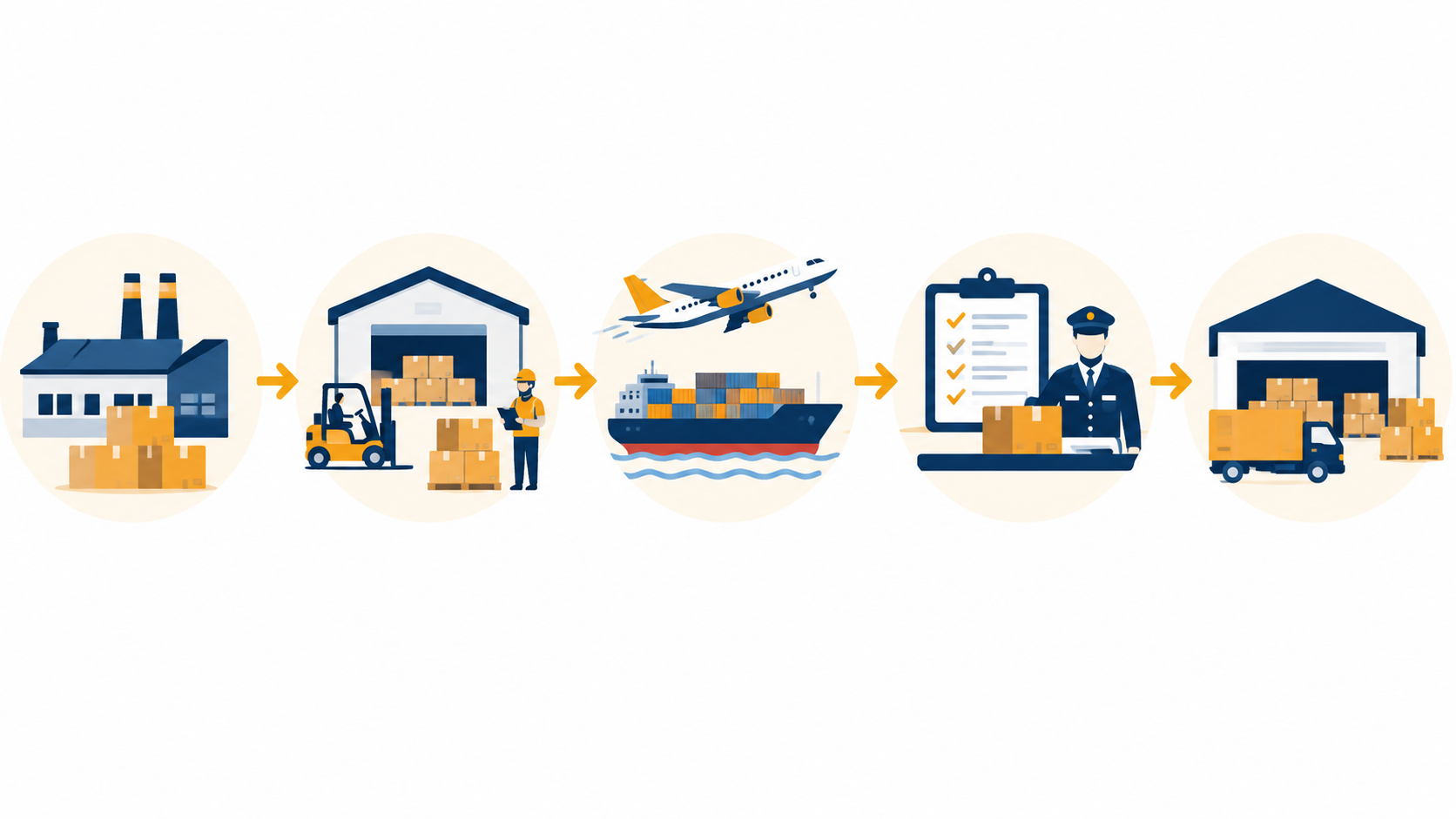
How to ship from China to Amazon FBA: six steps
Step 1: Build the shipment plan in Send to Amazon
Enter the SKUs, quantities, pack method and prep or labeling responsibility before creating the carton and transport paperwork. Amazon’s Send to Amazon workflow collects box-content information, box weight, box dimensions and preparation and labeling details; those fields should match the physical shipment.
If a carton contains one SKU in a repeatable pack-out, a case-pack setup may be clearer. If it contains multiple SKUs, enter each SKU and quantity as actually packed. Never invent a tidy carton pattern to make the form easier to complete.
Step 2: Make the supplier use the current label version
Labels should come from the current shipment plan, not from a previous order. Keep:
- the barcode or label required on each sellable unit;
- the FBA carton label for each outer carton;
- the carrier or freight label;
- packing list, commercial invoice and route-specific documents.
If an existing scannable barcode on a carton could be confused with the current shipment information, cover or render it unscannable as required. Ask the supplier for photos of every SKU and carton type, linked to the shipment number.

Step 3: Choose direct FBA delivery or a China-side prep warehouse
Direct delivery can work when the pack-out is stable, labels and documents have been verified, and the supplier can execute the controlled version. For a first shipment, multiple suppliers, relabeling or repacking, or products with special preparation requirements, a China-side prep or freight warehouse can expose problems before loading.
Do not assume that “prep warehouse” includes every operation. Confirm receiving, counting, photos, relabeling, repacking, palletizing, storage, consolidation and exception handling as separate scope items.
Step 4: Choose ocean, air or express
For shipping from China to Amazon FBA by ocean, ocean freight often suits larger shipments with a stable replenishment plan and a less urgent inbound date. FCL and LCL have different operating assumptions: LCL needs extra attention to receiving, deconsolidation, documentation and destination handling; FCL needs a clear plan for loading, seals, pallets and delivery appointments.
Air freight or express can suit samples, a small first batch, or a stockout-risk shipment, but chargeable weight can make the per-unit cost much higher. Do not replace a complete quote with “ocean is always cheapest” or “express is always easiest.”
Ask every provider to state pickup city, destination, chargeable weight or volume, transit-time definition, China-side pickup, export documents, customs, duties, destination delivery and appointment responsibility.

Step 5: Separate FBA delivery from import responsibility
“Deliver to Amazon” does not by itself identify the importer, the party paying duties and taxes, the customs broker, or the owner of the final delivery appointment. Ask the freight provider to state in writing:
- who files the export declaration and prepares commercial documents;
- who handles import clearance, duties, taxes and destination charges;
- whether cargo goes to a prep warehouse first and who arranges the final leg;
- what happens after an Amazon destination change, failed appointment, storage delay or missing document;
- what evidence and responsibility apply after damage, shortage or label non-compliance.
Step 6: Leave a traceable handover record
Before cargo leaves the supplier, save carton count, dimensions, weight, carton-label photos, packing list, seal photos and cargo-ready date. After the warehouse receives it, record received cartons, visible damage, shortages, repacking and added labels.
The purpose is not paperwork for its own sake. If Amazon reports a shortage, damage or extra handling charge, the record helps identify whether the issue began with the supplier, warehouse, carrier or destination delivery.
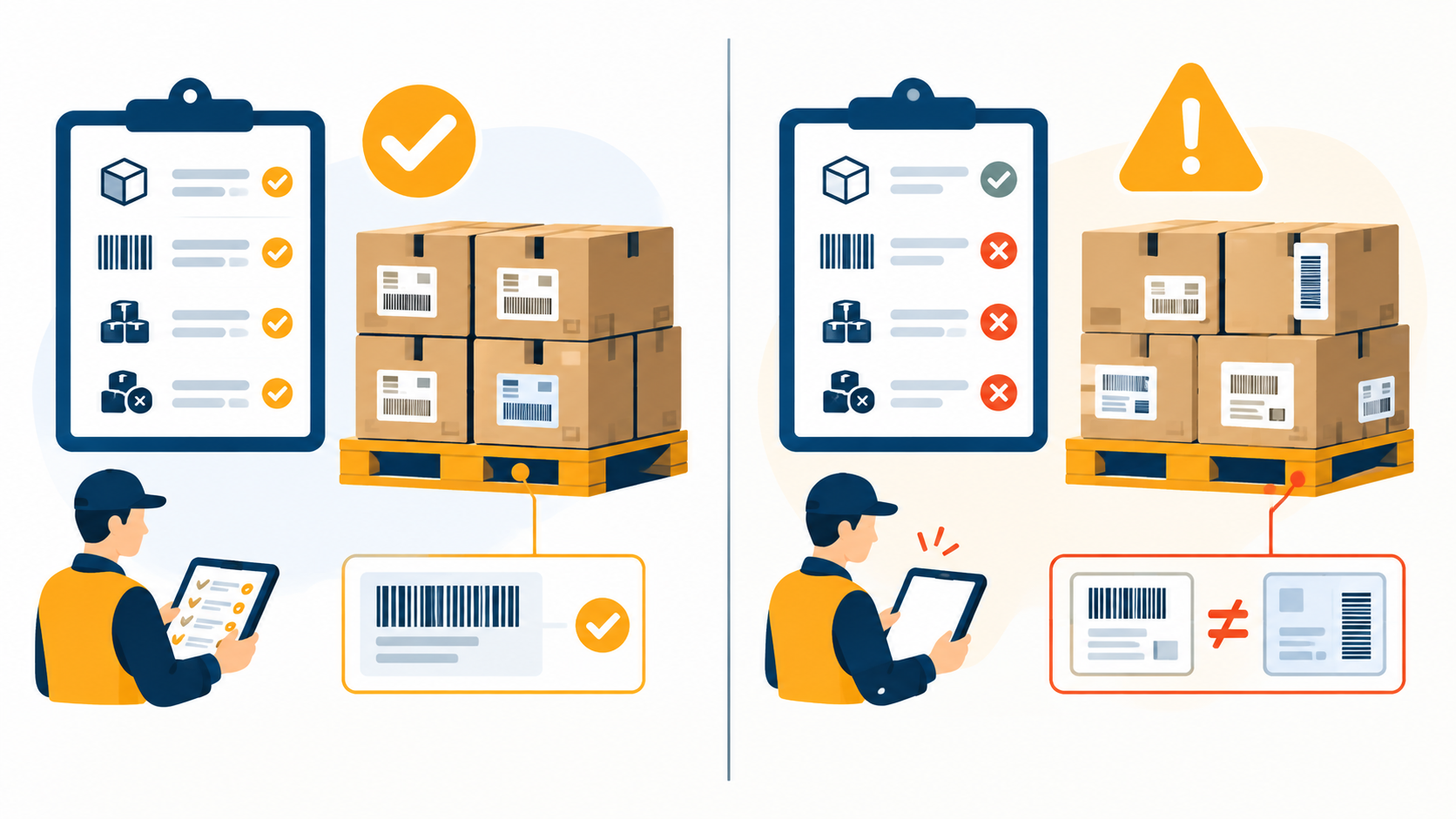
Common errors with FBA labels, cartons and packing data
Unit barcodes and carton labels are different
A unit barcode identifies the sellable item. A carton label identifies the outer shipping carton and its shipment. A unit-label error may affect one SKU; a carton-label error can affect the whole carton.
Do not treat a mixed-SKU carton as a single-SKU case pack
Enter the actual SKU and quantity for every mixed carton. If carton combinations change from shipment to shipment, do not blindly reuse an old case-pack template. Reconcile the carton contents and keep photos.
“Packed” does not mean “FBA-ready”
Supplier packaging, international-transit packaging and Amazon unit-prep requirements are different layers. They may overlap, but one does not automatically replace the others. List bundles, fragile products, liquids and battery products separately in the work order and quote.
How to compare the total cost of shipping from China to Amazon FBA
Break the quote into line items instead of comparing only a headline rate per kilogram or cubic metre:
- Product and supplier packaging;
- China-side pickup or delivery to a warehouse;
- Receiving, counting, consolidation, storage and prep operations;
- Relabeling, repacking, photos, pallets or inspection;
- International freight;
- Export documents, customs, duties, taxes and destination handling;
- Amazon appointment or final delivery;
- Rework, missing documents, return or storage charges that may apply.
Mark each line as included, excluded or to be confirmed. A low quote that does not state destination charges, import responsibility or repacking conditions should not be compared directly with a complete-scope quote.
A practical shipment timeline
This is a coordination example, not a promised transit time:
| Timing | Work | Output |
|---|---|---|
| T-10 to T-7 | Build the Send to Amazon plan; confirm SKUs, quantities and prep | Shipment version and label files |
| T-7 to T-5 | Supplier confirms carton data, cargo-ready date and restricted properties | Carton sheet and packing details |
| T-5 to T-3 | Prep or freight warehouse checks labels, counts and exceptions | Receiving/prep record and photos |
| T-3 to T-1 | Confirm transport mode, export documents and handover responsibility | Written quote and booking data |
| T-1 to T0 | Handover, sealing, final carton count and tracking | Handover record and tracking number |
If Amazon changes the destination, carton count or labeling requirement, return to Step 1 and update the version. Do not rely on a single chat message saying that “the address changed.”
FBA shipping checklist
- Marketplace, SKUs, quantities and Amazon destination confirmed;
- Barcode, bundle and category-specific unit-prep requirements confirmed;
- Supplier received the current unit-label and carton-label version;
- Total cartons, dimensions, gross weight, units per carton and mixed-carton status reconciled;
- Batteries, liquids, powders, magnets, branded or other restricted properties declared;
- Freight quote states pickup, receiving, prep, international freight, customs, taxes and destination responsibility;
- Transport mode matches replenishment timing instead of only the headline rate;
- Supplier dispatch photos, packing list and handover record saved;
- Current Seller Central requirements checked again on the dispatch date.
Conclusion
The core of shipping from China to Amazon FBA is not finding the cheapest freight rate. It is closing the loop between SKUs, labels, carton facts, transport mode and responsibility in one controlled version. For a first or complex shipment, confirm prep, receiving, freight and final delivery as separate scopes, then compare the total cost. That is usually cheaper than solving a relabeling, repacking or inbound exception after departure.
If you already have suppliers and cargo details, use the China Freight Quote Guide to prepare pickup city, carton, weight, product and destination information. If you need relabeling, consolidation or pre-inbound handling, review the FBA Prep and Handover Guide and confirm the exact work scope first.
Sources and further reading
Frequently asked questions
Can a supplier ship directly from China to Amazon FBA?
Yes, if the supplier can follow the current shipment plan, unit preparation, barcode, carton-label and box-content requirements, and someone clearly owns import clearance and final delivery. For a first shipment or a multi-supplier consolidation, a China-side prep or freight warehouse can make exceptions easier to catch before departure.
Is ocean freight from China to Amazon FBA always the cheapest option?
Not always. Ocean freight can suit larger shipments with a flexible replenishment window, but consolidation, prep, destination handling, taxes and final delivery can change the total. Compare complete quotes using the same cargo data, destination and responsibility assumptions.
Does a DDP quote guarantee successful FBA delivery?
No. DDP describes the transport and import-cost scope offered by the provider; it does not replace Amazon's shipment, packaging, labeling or appointment requirements. Confirm the importer, tax documents, FBA delivery responsibility and exception handling in writing.
What should I do if Amazon changes the FBA destination?
Pause dispatch under the old version. Update the shipment, carton labels, quote and handover documents, then obtain written confirmation from the supplier and freight provider. Do not change only the address while keeping old labels or carton counts.